Five Maharashtra Districts Face Rapidly Intensifying Flash Droughts, Finds 44-Year Study
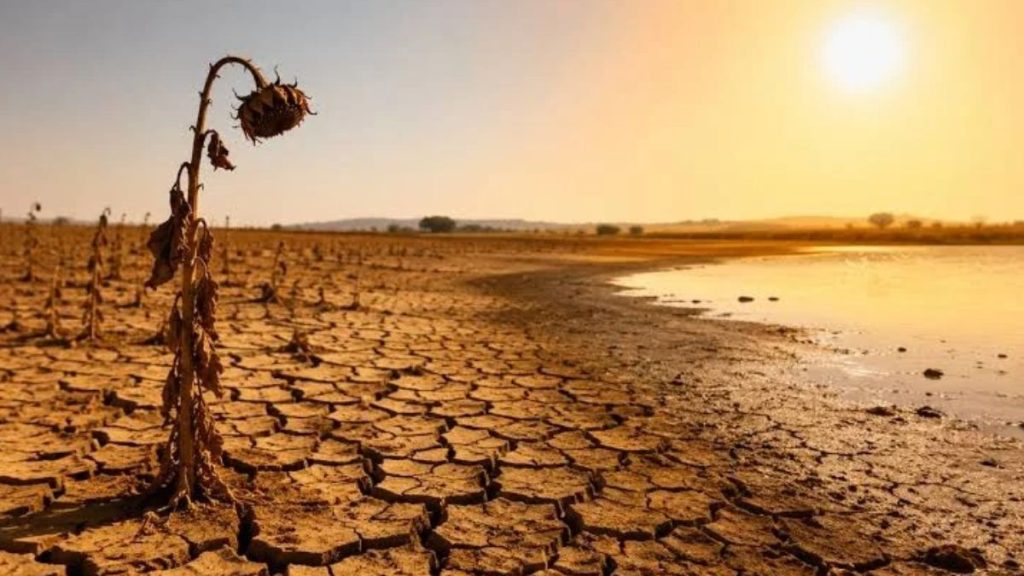
Mumbai, 25th November 2026: Five semi-arid districts in Maharashtra are particularly vulnerable to severe and rapidly intensifying flash droughts, with soil moisture levels declining sharply within days, according to a study conducted by the Department of Civil Engineering at Maulana Azad National Institute of Technology (MANIT), Bhopal.
The study identifies Ahilyanagar, Beed, Dharashiv, Sangli and Solapur as the state’s most vulnerable districts. Researchers Vikas Poonia and Deepika Yadav analysed 44 years of data, from 1981 to 2024, covering all 36 districts of Maharashtra. The findings were published in the journal Physics and Chemistry of the Earth in October 2026.
Unlike conventional droughts, which develop over a season or longer, flash droughts can push agricultural land from normal moisture levels to severe dryness within a few weeks, leaving farmers and water management authorities with limited time to respond.
In the five identified districts, soil dryness intensified by six to nine percentile points every eight days, exceeding nine points in certain areas. In comparison, the rate remained below six points across most other parts of the state.
The study found that flash droughts were relatively uncommon during the monsoon, with most districts recording fewer than two such events over the 44-year period. Outside the monsoon, however, districts recorded an average of around 20 events, with Solapur, Dharashiv, Ratnagiri and Sindhudurg recording more than 25.
The transition between the dry season and the monsoon was identified as the most vulnerable period, when temperatures peak but regular rainfall has yet to arrive. Some flash droughts during this period lasted between 30 and 40 days, while dry-season events typically continued for 20 to 25 days.
Rainfall deficit was identified as the primary trigger across several districts, including Pune, Nashik, Satara, Kolhapur, Ratnagiri and Sindhudurg. Researchers noted that high temperatures and dry atmospheric conditions further accelerated soil moisture loss when combined with prolonged rainfall shortages.
The study also found significant long-term increases in flash drought frequency in Dharashiv and Washim, while the rate of intensification increased significantly in Solapur and Sindhudurg.
The findings come as Maharashtra enters the dry season following a weak southwest monsoon in 2026, which ended 13% below the long-period average. Researchers have urged district administrations and farmers to strengthen drought preparedness, particularly in vulnerable semi-arid districts.
They also recommended improving early-warning systems by monitoring soil moisture, temperature and atmospheric dryness alongside rainfall. IIT Bombay’s KrishiDrought.in portal, which provides district-level agricultural drought forecasts up to four weeks ahead, was highlighted as one such monitoring resource.