JRD Tata’s Historic 1932 Flight: Airmail, a Puss Moth and Petrol on a Bullock Cart
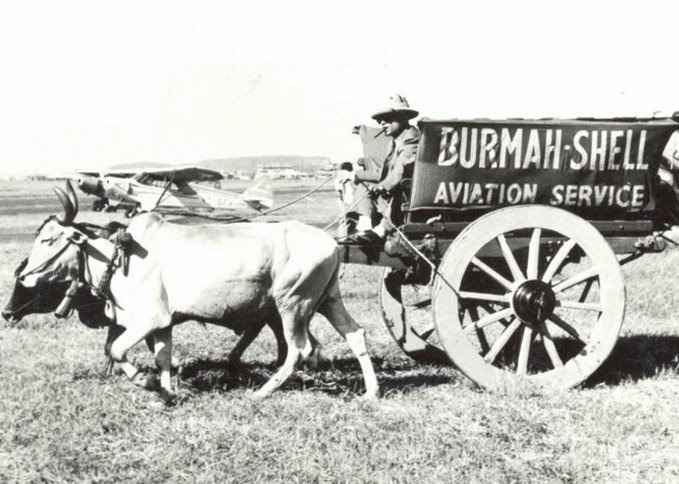
Mumbai, 15th October 2026: Long before Air India became known for wide-body aircraft and international routes, its first flight depended on something far more modest: a bullock cart carrying cans of petrol.
On 15 October 1932, J.R.D. Tata piloted the first scheduled airmail flight of Tata Sons’ aviation service, flying a single-engine De Havilland Puss Moth from Drigh Road Aerodrome in Karachi to Ahmedabad and then Juhu in Bombay. The aircraft carried airmail, not passengers, marking the beginning of what would eventually become Air India.
The journey began at 6.30 am, when Tata took off from Karachi, then part of British India. The mail on board had arrived from London via Imperial Airways, and Tata’s Puss Moth was to carry it onward to Bombay.
The flight was not a passenger service. Its purpose was to prove that air transport could move letters between cities faster than existing means. The aircraft carried roughly 25 kg of mail, demonstrating the practical value of aviation at a time when commercial flying in India was still in its infancy.
Tata landed at Juhu, on Bombay’s mud flats, in under eight hours. By train, the same Karachi-Bombay journey took about 45 hours, making the flight a powerful demonstration of how aviation could change communication and connectivity.
At Ahmedabad, the aircraft stopped to refuel. There were no modern fuel bowsers or airport infrastructure waiting on the tarmac. Instead, a bullock cart trundled onto the runway carrying four-gallon cans of Burmah Shell petrol, which were poured directly into the small aircraft’s tank.
While J.R.D. Tata piloted the historic first leg, Nevill Vintcent was central to making the service possible. A former Royal Air Force pilot, Vintcent proposed an airmail route connecting Karachi, Bombay and Madras. He also persuaded Tata Sons chairman Sir Dorabji Tata, who was initially reluctant, to invest Rs 2 lakh in the aviation operation.
After Tata landed in Bombay with the mail, Vintcent took over. He flew another Puss Moth carrying the mail onward towards Madras, via Bellary, completing the next stage of the route.
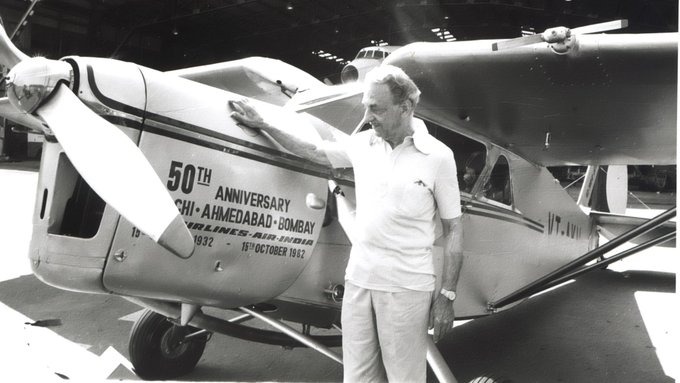
The aviation department of Tata Sons became Tata Airlines in 1938 and was renamed Air India Ltd in 1946. Fifty years after the inaugural flight, J.R.D. Tata returned to the skies in 1982 to recreate the historic Karachi-Bombay journey.
From a bullock cart delivering petrol cans to jet aircraft flying across continents, Air India’s origin story remains one of the most striking reminders of how far Indian civil aviation has travelled.