Mumbai Local Ticketless Travel to Face Tighter Checks; Central, Western Railways Seek More TCs
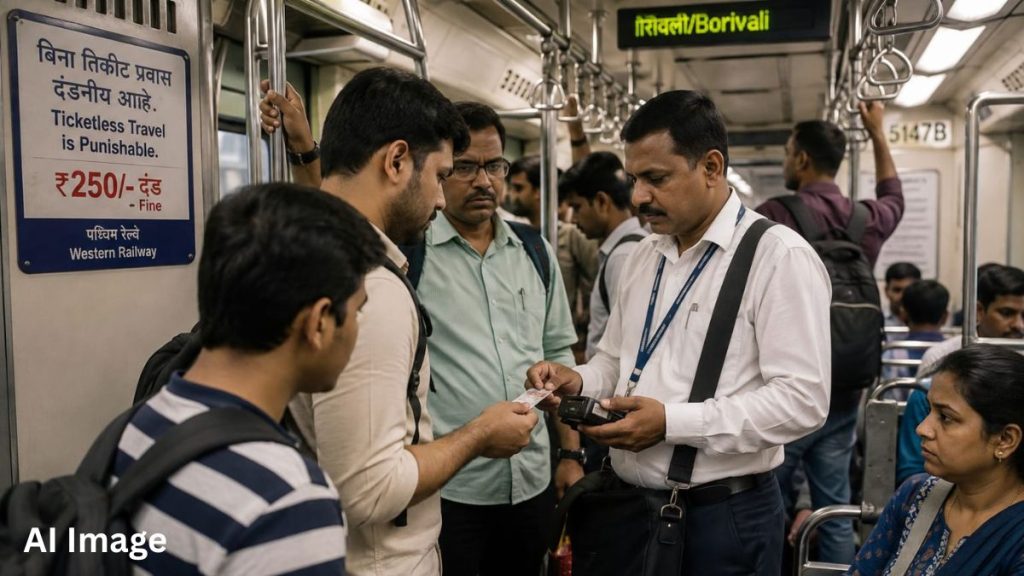
Mumbai, 8th August 2026: Travelling without a valid ticket on Mumbai’s suburban local trains could become more difficult, with Central Railway and Western Railway proposing a significant increase in the number of ticket-checking staff (TCs).
Both railway zones have reportedly approached the Railway Board seeking approval to increase their ticket-checking workforce, citing the growing number of suburban passengers and the difficulty of conducting regular checks with the existing staff strength.
At present, around 1,400 TCs are working in the Mumbai division of Central Railway, while Western Railway has approximately 1,100 TCs. Railway authorities believe the existing workforce is inadequate to effectively cover the city’s extensive suburban network.
Nearly 4,700 TCs Required
As per the requirement cited by the railways, one ticket-checking employee should be available for every 1,000 passengers. Central Railway estimates that it needs around 2,800 TCs, considering an average daily passenger volume of 35–38 lakh in its Mumbai suburban network.
Western Railway, which handles around 28–30 lakh suburban passengers daily, is estimated to require approximately 2,300–2,400 TCs.
Together, the two railway zones could require nearly 4,700 ticket-checking employees.
Mumbai’s suburban railway network carries more than 65 lakh passengers daily, with the overall daily ridership estimated at around 70–80 lakh. The network, spread across approximately 450 kilometres, is considered the lifeline of the city.
Focus on Ticketless Travel and Reserved Classes
If the proposal receives approval, the additional TCs are expected to be appointed in phases. The move is aimed at strengthening ticket-checking operations at stations as well as inside local trains.
The additional workforce could also allow railway authorities to deploy dedicated checking teams at major stations during peak hours. Special attention could be given to passengers travelling without valid tickets in AC locals and first-class compartments, as well as those violating rules in compartments reserved for women and persons with disabilities.
Special checking teams could also be deployed during festivals, special drives and night-time operations.
Railway officials believe that increasing the number of TCs would not only help curb ticketless travel but also reduce the workload on existing staff. Currently, TCs are required to handle checking drives at major stations and perform additional duties, placing considerable pressure on the existing workforce.
If approved, the proposed increase in staff is expected to make ticket checking more systematic and strengthen enforcement across Mumbai’s suburban railway network.