Pune: IMD Issues Red Alert for Ghat Areas as Heavy Rain Continues
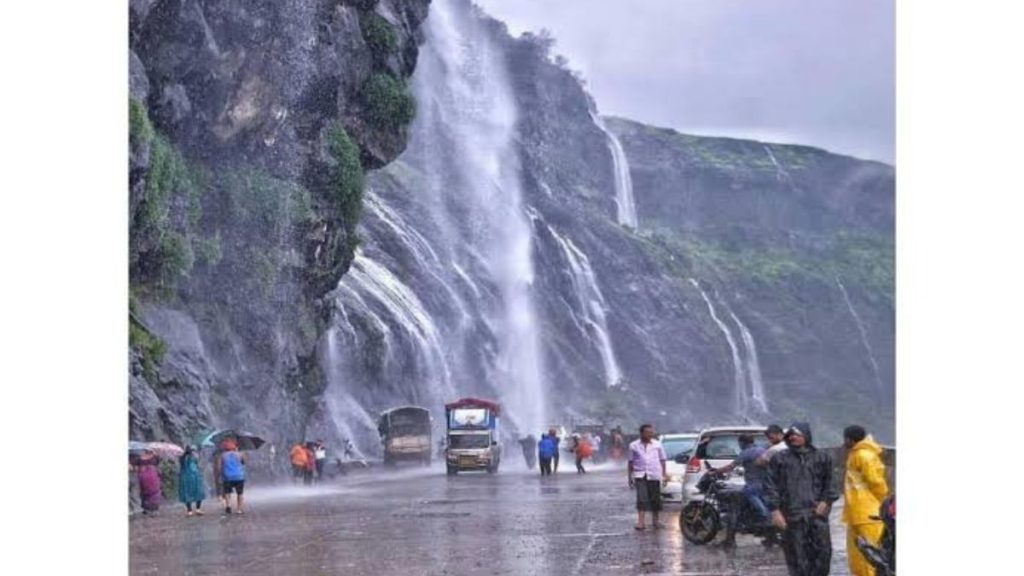
Pune, 22nd July 2026: After three consecutive days of persistent rainfall, showers intensified across Pune district on Tuesday, prompting the India Meteorological Department (IMD) to issue a Red Alert for the ghat sections of the district for Wednesday.
The city and its suburbs witnessed continuous rainfall from the early hours of Tuesday, with the intensity increasing significantly by evening. Overcast skies and incessant rain led to a noticeable drop in daytime temperatures. The maximum temperature fell by around 2°C to 28°C, while the minimum temperature was recorded at 22.3°C.
The IMD has forecast that the prevailing weather conditions are likely to continue over the next two days, with no significant change in temperatures expected for the next three to four days. Pune city is expected to receive moderate rainfall, with the maximum and minimum temperatures on Wednesday likely to remain around 28°C and 22°C, respectively.
According to the forecast, the sky will remain partly cloudy in the morning and generally cloudy during the afternoon and evening, with light to moderate rain likely in the city. However, the ghat sections of Pune district are expected to witness heavy to very heavy rainfall, with isolated places likely to receive extremely heavy rain. Authorities have advised residents and travellers to exercise caution, particularly in hilly areas prone to landslides and flooding.
The IMD attributed the widespread rainfall to multiple active monsoon systems across the country. The monsoon trough currently extends from Sri Ganganagar through Rohtak, Hamirpur, Sidhi, Ranchi, and Digha into the northwest Bay of Bengal. In addition, cyclonic circulations persist over Haryana, northeast Madhya Pradesh, southwest Rajasthan, and north Chhattisgarh.
Another trough extends from the west-central Bay of Bengal and the adjoining north Andhra Pradesh coast to the northeast Arabian Sea, passing through south Odisha, Chhattisgarh, Madhya Pradesh, south Rajasthan, and Gujarat, at an altitude of 3.1 km to 5.8 km above mean sea level. The combined influence of these weather systems has created favourable conditions for widespread rainfall across several parts of the country, including Maharashtra.