Mumbai: BJP Mahila Jan Akrosh Rally Faces Backlash Over Peak-Hour Traffic Blockade
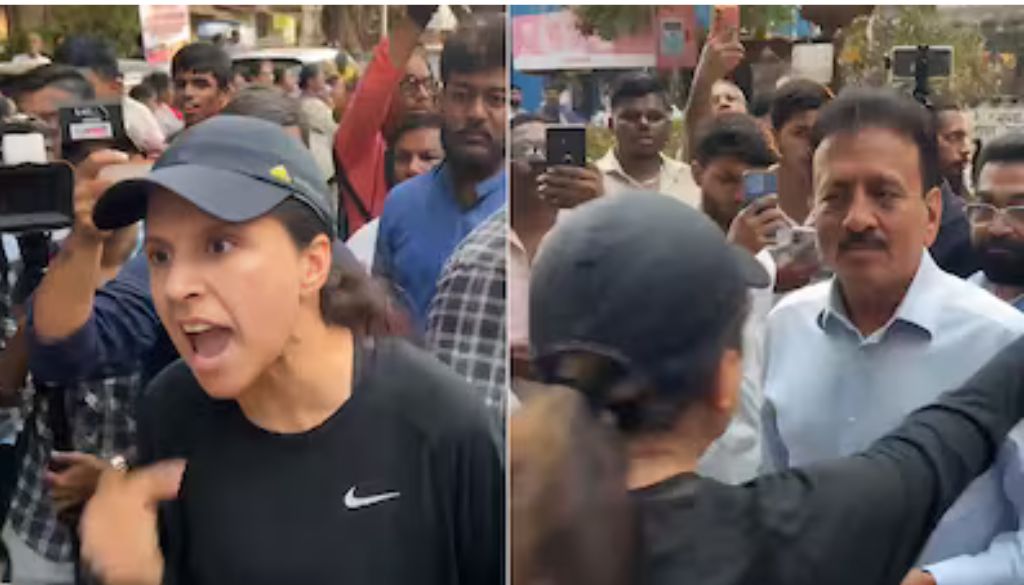
Mumbai, 22nd April 2026: A moment of public frustration cut through the charged atmosphere at Mumbai’s Jambori Maidan on Tuesday evening, as a woman attending the BJP’s ‘Mahila Jan Akrosh Rally’ confronted the manner in which the protest was unfolding. In a video that has since circulated widely, she is seen pointing to the largely vacant ground and urging organisers and demonstrators to move the gathering there rather than spilling onto busy roads during peak hours.
The rally, organised by the BJP along with its allies, was intended to highlight delays in implementing the 2023 Women’s Reservation Bill, which proposes reserving one-third of seats for women but remains contingent on the completion of a census and subsequent delimitation exercise. While the political messaging centred on representation and urgency, the disruption to everyday life became the immediate flashpoint on the ground.
Her outburst, unfiltered and direct, struck a chord beyond the rally itself. Opposition leaders were quick to amplify the video, framing it as a reflection of growing public impatience with political demonstrations that bring city movement to a halt. Many Mumbai residents echoed similar sentiments online, pointing to the recurring strain such events place on already congested commute routes.
At the same time, supporters of the rally pushed back against the criticism, arguing that protests are a legitimate democratic tool and that large-scale mobilisation inevitably entails some inconvenience. The incident has, in effect, reopened a familiar debate in Mumbai, the balance between the right to protest and the right to uninterrupted public movement.
What remains notable is how a single, spontaneous intervention from within the crowd briefly shifted the narrative of a planned political event, drawing attention not just to the cause being championed, but to how it is carried out in a city that rarely has room to pause.