Mumbai: AC Local Breakdown During Rush Hour: Passengers Suffer Suffocation, Railway Orders Inquiry
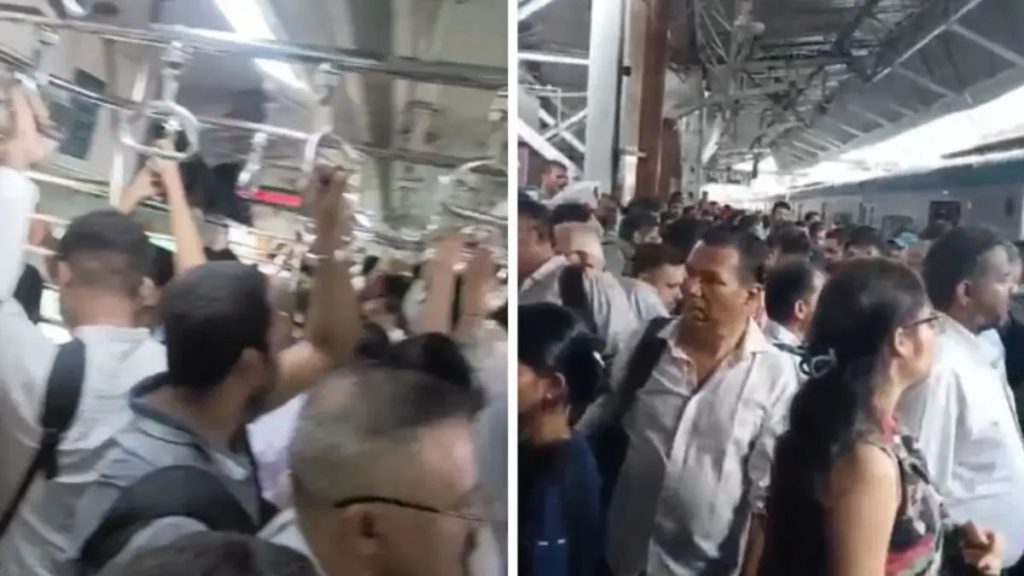
Mumbai, 13th July 2026 A malfunction in the air-conditioning system of a Titwala–Chhatrapati Shivaji Maharaj Terminus (CSMT) AC local during Monday morning’s peak hours led to a suffocation scare, with several passengers reporting breathing difficulties and a few briefly fainting inside the crowded train. One passenger was taken to a hospital for medical treatment, while Central Railway has ordered a technical inquiry into the incident.
The 8:33 am Titwala–CSMT AC local developed an air-conditioning failure during its journey. Following complaints from commuters, the train was halted at Mulund railway station from 9:38 am to 9:54 am to facilitate technical intervention. As the AC system remained non-functional, the train was operated with its doors open between Mulund and Kurla to improve ventilation for passengers.
According to Central Railway Chief Public Relations Officer Dr. Swapnil Nila, the train was carrying an onboard technician from the Train System Response Team (TSRT). However, the heavy rush inside the coaches prevented the technician from reaching the control panel to operate the emergency override switch.
The loss of air-conditioning and ventilation inside the sealed AC coaches caused discomfort among passengers. Two women who experienced mild breathing difficulties were provided medical assistance after being deboarded and later continued their journey. A 43-year-old man who developed more serious respiratory distress was shifted to a nearby hospital, treated, and discharged at around 11:30 am.
To minimise disruption to suburban operations, the affected AC local was withdrawn from service at Kurla station. Central Railway replaced it with a conventional non-AC rake to maintain scheduled services and said an alternative AC rake would be deployed to restore normal AC suburban operations.
Central Railway has initiated a technical investigation into the incident. The inquiry will examine the cause of the air-conditioning failure as well as why the train’s backup cooling system, designed to automatically shift the load to adjacent operational units during such failures, did not activate. Railway officials said the findings of the probe will determine the reason behind the malfunction.